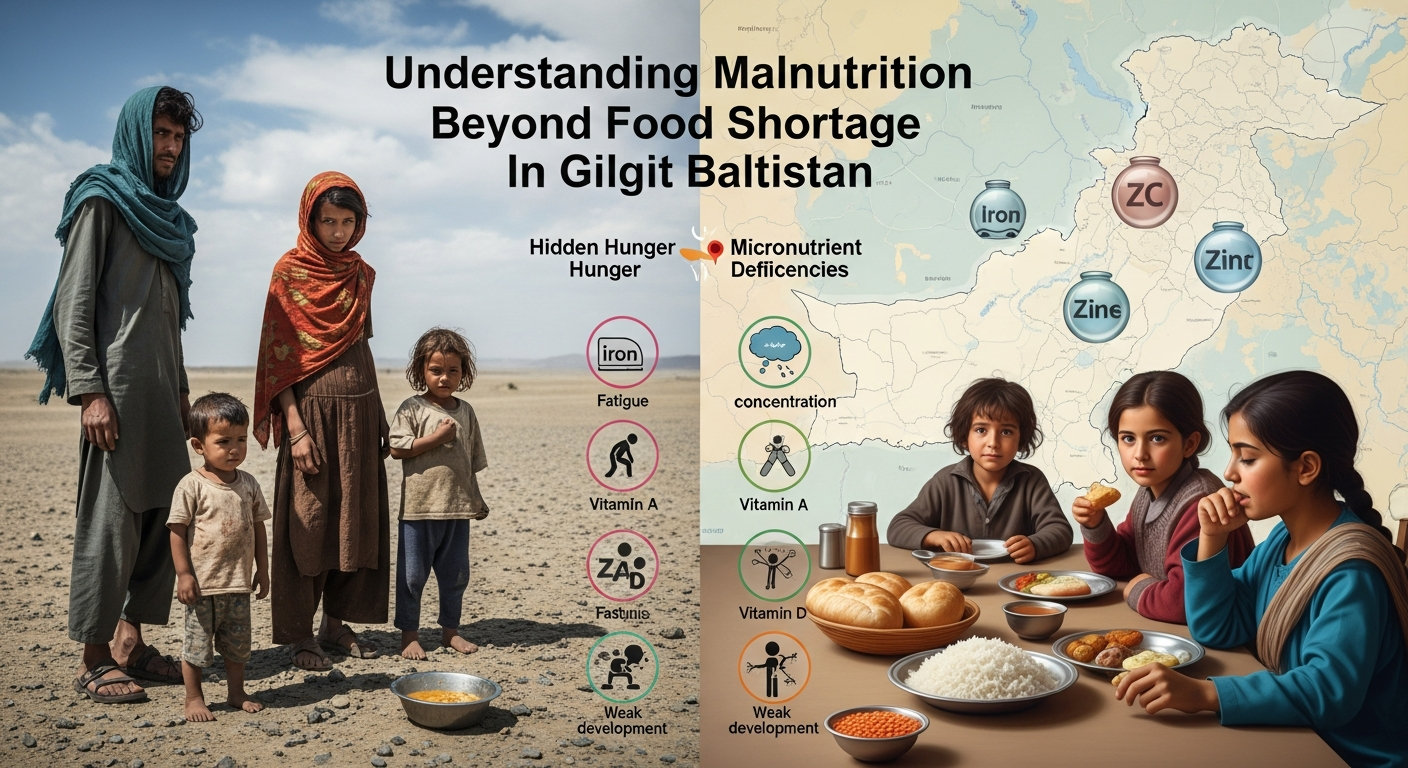
When we hear the word malnutrition, most of us imagine people who have no food at all, living in extreme poverty and hunger. But there is another kind of malnutrition that is less visible and more silent. It affects millions of people even when they eat regular meals every day. This problem is referred to as “hidden hunger”. Hidden hunger happens when the food on the plate does not sufficiently provide the vitamins and minerals that the body needs to grow strong and healthy. A person may eat enough rice, bread, or roti to feel full, but without iron, iodine, zinc, vitamin A, and vitamin D, they remain weak, tired, and unable to think clearly.
The Hidden Hunger Crisis in Pakistan
In Pakistan, hidden hunger is everywhere but often goes unnoticed. Meals are often heavy with carbohydrates, like rice, wheat, and roti, but they miss out on fruits, vegetables, dairy, and proteins. This imbalance creates serious shortages. According to the National Nutrition Survey 2018 (the most detailed recent national data), the deficiencies that are alarmingly common include:
- Iron deficiency, the leading cause of anaemia, affecting over 40% of children under five and nearly 43% of women of reproductive age, also leads to poor concentration and low energy.
- Iodine deficiency: impairs brain development and lifelong learning ability
- Vitamin A deficiency: weakens immunity and eyesight, prevalent in about 52% of young children
- Vitamin D deficiency: undermines bone health and vitality, affecting over 60% of children
These problems are most common among children, teenagers, and women, and they quietly reduce academic performance and work capacity, as well as overall wellbeing..
Hidden hunger is not just about health, it is a hindrance to education and productivity. A child who cannot concentrate in school because of iron deficiency may be seen as lazy, but in reality, their brain is not getting enough oxygen. A young girl without iodine in her diet may struggle with learning for her whole life. Adults who lack proper nutrition often feel exhausted, fall sick more often, and cannot work to their full potential. This cycle of weakness and low productivity holds back families, communities, and consequently, the nation.
Gilgit-Baltistan: A Local Picture of Hidden Hunger
The situation in Gilgit-Baltistan shows us how hidden hunger looks in daily life. In many homes, meals consist of chai and roti, especially during the long winters when fresh vegetables are not available as a result of harsh weather and geographical isolation. These foods are convenient and affordable, but they do not provide the nutrients needed for strong immunity and healthy growth. Poverty and isolation make it difficult for families to access better food, so children grow up with weak bodies and limited energy.
In recent years, the Aga Khan Rural Support Programme (AKRSP) has introduced small but powerful solutions. Through initiatives like the Central Asia Poverty Programme, over 500 families are supported by AKRSP to build home-based greenhouses where they can grow leafy vegetables even in the cold months. Spinach, lettuce, and other greens provide vitamins and minerals that strengthen immunity and improve diets. These vegetables can also be sold in local markets, giving families a source of income. In villages across Ghizer, Diamer, and beyond, women have led the way. One woman in the village of Immit built a greenhouse and now supports her children by selling vegetables. She also feeds them nutritious meals to keep them healthy and strong. Her story shows how simple tools can break the cycle of hidden hunger and poverty.
When one family succeeds, others see the benefit and follow. Soon, more homes have access to fresh vegetables, and the whole community becomes healthier. These greenhouses are not just about food, they represent dignity, opportunity, and hope.
Addressing the Problem
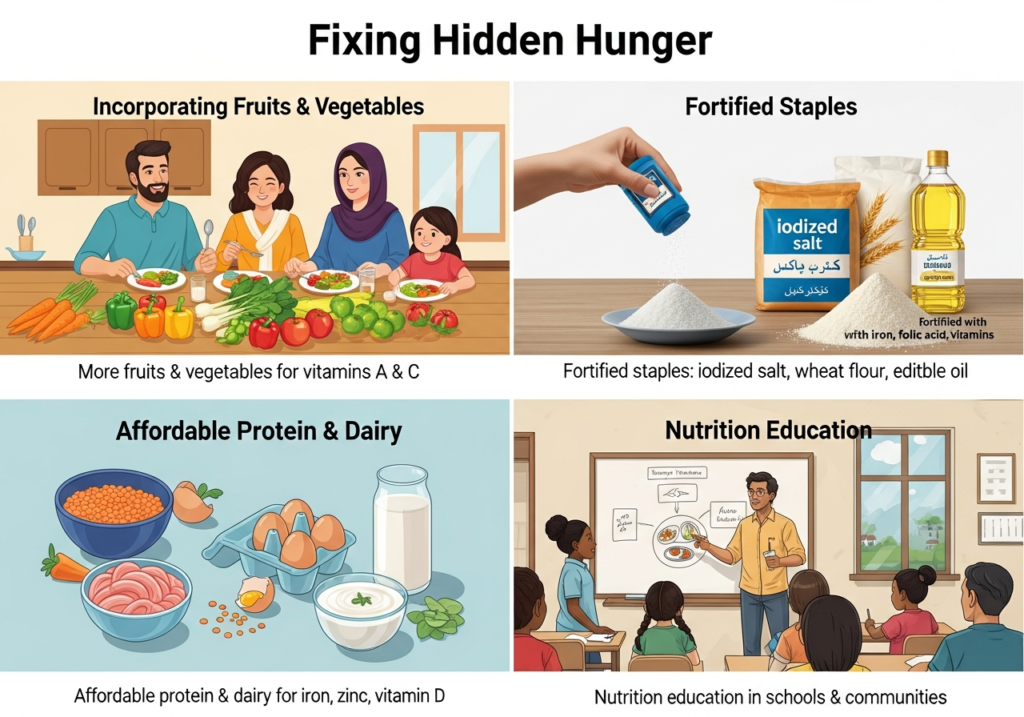
Fixing hidden hunger does not require drastic changes. It begins with awareness and small steps toward balance in daily meals. Families can make meaningful progress by:
- Incorporating more fruits and vegetables into meals for essential vitamins like A and C
- Relying on fortified staples, such as iodised salt (widely promoted in Pakistan to combat iodine deficiency) and increasingly fortified wheat flour or edible oil with iron, folic acid, and vitamins
- Adding affordable sources of protein and dairy, like lentils, eggs, milk, or yoghurt, to boost iron, zinc, and vitamin D intake
- Promoting nutrition education in schools, community centres, and through health programmes to empower informed choices
These small, sustainable changes in what people eat, supported by national initiatives like food fortification programs and micronutrient supplements, can bring big improvements in health, learning, and productivity.
Why This Matters
Hidden hunger teaches us that having enough food is not the same as having good food. Real nutrition is about strength, sharp thinking, and the ability to live a productive life. At Nutrashine, we believe nutrition should empower people, not just fill them up. By tackling hidden hunger, we can help children learn better, adults work stronger, and communities grow healthier.
The story of Gilgit-Baltistan shows us that effective solutions are possible, even in the hardest conditions. With awareness, support, and simple tools, families can fight hidden hunger and build a future where food is not only about survival but also about strength, dignity, and opportunity.
By Aleena Abuzar
Leave a Reply